Cooling
Refrigerator Not Cooling? Here’s What to Check
If your refrigerator is not cooling, the most likely cause is dirty condenser coils or a failed evaporator fan. Both stop the fridge from moving heat…
If your refrigerator is not cooling, the most likely cause is dirty condenser coils or a failed evaporator fan. Both stop the fridge from moving heat out, so the inside slowly warms up even though the compressor still runs. A handful of quick checks can tell you which one it is, and whether you’re looking at a small fix or a real repair.
We see this call almost every week at Ali Appliance Repair. Food starts to spoil, the milk feels off, and the owner isn’t sure if it’s worth fixing or time to shop for a new fridge.
Why Is My Refrigerator Not Cooling? (Quick Answer)
A warm fridge with a working freezer usually points to blocked airflow, not a dead compressor. Dirty coils and a stuck evaporator fan cause most calls. Start with the five checks below before you assume the worst.
A refrigerator cools by pulling heat out of the food compartment and pushing it out through the coils on the back or bottom. A fan then moves that cooled air around the inside. When any part of that chain gets dirty, stuck, or blocked, the temperature drifts up even though the fridge sounds like it’s working fine. That’s why a fridge can hum along, lights on, motor running, and still leave your food warm.
Quick Checks Before You Call Anyone
These take less than two minutes each. Try them before you touch anything else.
Check the power first. A half-plugged cord, a tripped breaker, or a power strip that got bumped can look exactly like a broken fridge from the outside. It sounds obvious, but we’ve been called out for exactly this more than once.
Look at the temperature setting. Kids, cleaning crews, and grocery deliveries bump these dials more often than people admit. The fridge compartment should sit between 37 and 40 degrees, and the freezer should sit at 0 degrees or lower.
Don’t overpack it. A fridge stuffed to the brim blocks its own vents and can’t push cold air where it needs to go. Oddly enough, a nearly empty fridge can struggle too, since there’s less mass to hold the cold once it’s reached.
Check for blocked vents inside. Move anything sitting directly in front of the vent grille, especially in the back panel or along the bottom shelf. A single large container pushed against the vent is a surprisingly common culprit.
Run a hand along the door gasket. If you feel a gap, a stiff spot, or a section that’s cracked, warm air is getting in every time the door closes. A simple test is to close the door on a dollar bill. If it slides out easily, the seal has probably worn thin.
If all five check out and the fridge is still warm, something inside has actually failed. That’s where the causes below come in.
8 Reasons a Refrigerator Stops Cooling
Here they are in the order we actually see them on service calls, not by how dramatic they sound.
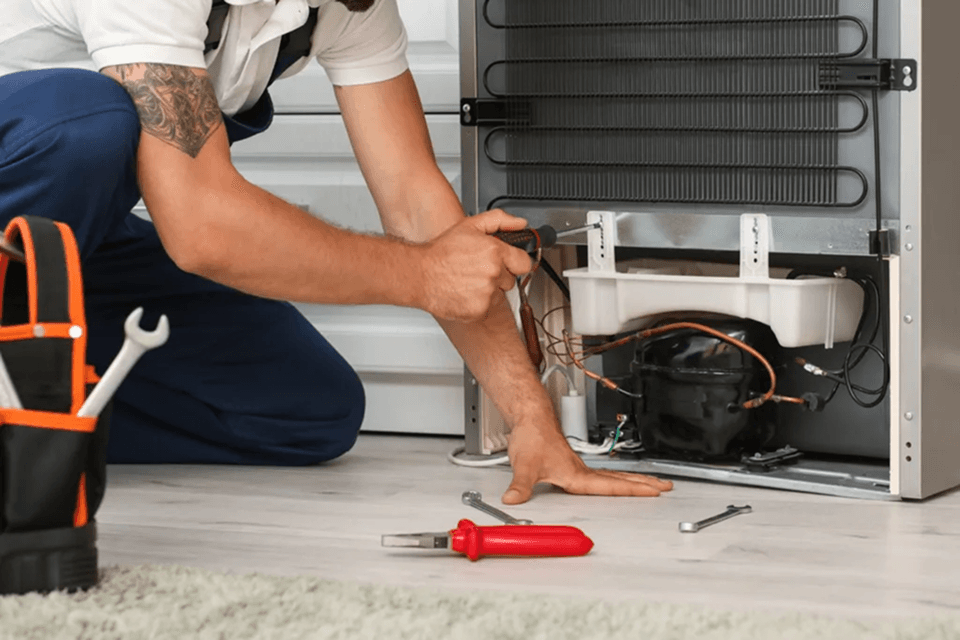
1. Dirty condenser coils. These sit under or behind the fridge and release the heat pulled out of the food compartment. Dust, pet hair, and kitchen grease coat them over time, and a coated coil simply can’t shed heat the way it should. This is the single most common cause we find on service calls, especially in homes with pets or a kitchen near a busy hallway. The fix is often as simple as pulling the fridge out and running a vacuum along the coils.
2. Failed evaporator fan. This small fan pushes cold air from the freezer section into the fridge compartment. When it seizes up or burns out, the freezer often stays cold while the fridge warms up, since the cold air has nowhere to go. You might also hear a faint buzzing or grinding noise from the back of the freezer before it fails completely.
3. Blocked vents. Even with a working fan, ice or stray food packaging can block the path the cold air travels between compartments. This one’s an easy fix once you spot it, though it can look identical to a fan problem until you check.
4. Defrost system failure. The defrost heater, timer, and thermistor work together to melt frost off the evaporator coil on a set schedule. If one part fails, frost quietly builds up behind the back panel and eventually blocks airflow completely. By the time you notice, there’s often a solid sheet of ice back there.
5. Worn door gasket. A gasket that’s lost its seal lets warm, humid air creep in every time someone opens the door, and sometimes even when it’s closed. The compressor runs harder to compensate, but it’s fighting a losing battle, and your energy bill usually creeps up along with it.
6. Faulty thermistor or control board. The thermistor reads the internal temperature and reports it to the control board, which then decides when to run the compressor. If the sensor gives a wrong reading, the board may think the fridge is already cold when it isn’t, so it simply never kicks the compressor on long enough.
7. Failed start relay. This small component gives the compressor the jolt of current it needs to start up. A relay that’s gone bad can prevent the compressor from starting at all, or cause it to click repeatedly and shut off before it ever gets going.
8. Failing compressor. The compressor is the heart of the cooling system, and it’s built to last for years. When it’s on its way out, you might hear it running constantly without ever cooling, or barely running at all. This is the least common cause on our call list, but it’s usually the most expensive to fix, and sometimes not worth fixing.
Freezer Is Cold, but the Fridge Isn’t. What That Means
This exact combination is one of the most common calls we get, and it’s usually good news. When the freezer stays cold, but the fridge warms up, the compressor is almost always fine. The problem sits somewhere between the two, usually the evaporator fan or a blocked air path.
However, don’t ignore it. Left alone, frost can build up enough to choke off airflow entirely, and then both compartments start to suffer.
How to Save Your Food While You Wait
While you’re waiting on a repair, a few habits buy you time and keep food safer.
Keep the door shut as much as possible. Every open door lets warm air in and makes the fridge work harder to recover.
Move essentials, dairy, meat, and anything that spoils fast, into a cooler with ice. Treat it like a short camping trip for your food.
Follow the four-hour rule. According to FDA food safety guidelines, perishable food left above 40 degrees for more than four hours should be thrown out, even if it looks and smells fine.
Group items together in the fridge rather than spreading them out. A tighter cluster of cold food holds its temperature longer than scattered items in a half-warm box.
If you have a chest freezer or a spare cooler in the garage, now’s the time to use it. Frozen items in the freezer compartment will usually stay safe longer than fridge items, so prioritize saving what’s already going soft. A cheap appliance thermometer, kept in the fridge year-round, also takes the guesswork out of deciding what to toss.
Repair or Replace? What It Usually Costs
Not every fix is worth the money, and we’d rather tell you that upfront than talk you into a repair you don’t need.
| Cause | Can you fix it yourself | Typical cost |
|---|---|---|
| Dirty condenser coils | Yes, with a vacuum or coil brush | $0 to $50 |
| Evaporator fan | Sometimes, if you’re comfortable with tools | $150 to $250 |
| Blocked vents | Yes | $0 |
| Defrost system parts | Rarely, needs diagnosis | $150 to $350 |
| Door gasket | Yes, gasket kits are available | $50 to $150 |
| Thermistor or control board | No | $200 to $450 |
| Start relay | No | $100 to $250 |
| Compressor | No | $300 to $600, plus labor |
As a rough rule, a fan or relay repair on a fridge under eight years old is almost always worth it. A compressor replacement on a unit past ten years old often isn’t, since you’re paying repair labor on top of a part that’s already near the end of its expected life. In that case, putting the money toward a new fridge usually makes more sense.
When to Call a Technician
Call sooner rather than later if you’ve done the five quick checks and the fridge is still warm after a few hours. Frost buildup, a clicking compressor, or a fridge that runs constantly without ever feeling cold are all signs the problem is inside the system, not something you can fix with a cloth and a vacuum.
We offer refrigerator repair in Des Plaines, IL, and the surrounding suburbs, because a fridge full of spoiling food isn’t something that should wait a week for an appointment. Most other appliance calls can wait a few days without much cost. A fridge that’s stopped cooling is different, since every hour adds up in spoiled groceries and, sometimes, a family scrambling to figure out dinner.
Frequently Asked Questions
Why is my freezer cold but my refrigerator warm?
This usually means the evaporator fan has failed or something is blocking the vent between the freezer and the fridge. The compressor itself is almost always still working fine.
How long does a fridge take to cool down after a repair?
Most fridges return to a safe temperature within four to six hours after a repair, though a full reset to normal running temperature can take up to 24 hours.
Is it worth repairing a refrigerator that isn’t cooling?
It depends on the part and the age of the fridge. Fan, relay, and gasket repairs are usually worth it. A compressor failure on an older unit often isn’t.
Can dirty condenser coils stop a fridge from cooling?
Yes, and it’s the most common cause we see. Coils coated in dust and pet hair can’t release heat properly, so the fridge runs constantly without ever reaching a safe temperature.
How much does refrigerator repair cost?
Most repairs run between $100 and $450 depending on the part involved. A full compressor replacement can run higher, and we’ll always tell you honestly if replacement makes more financial sense. If it turns out to be an airflow issue near the freezer, our freezer repair page covers that side of things in more depth. We also serve Park Ridge, Niles, and Mount Prospect, alongside Des Plaines, so help is close by no matter which suburb you’re in.
When a safe check does not resolve the problem
Stop before dismantling the appliance or testing electrical or gas components. Review the relevant service options and describe the symptoms when requesting a visit.